When water appears where it should not, the fastest route is not always simply “book a repair”. If the fault is visible, accessible and clearly tied to one fitting, a repair visit may be the right starting point. If the symptom is showing on a wall or ceiling while the source remains uncertain, the first job is investigation.
For anyone looking for a plumber in Leyland, WS Gas Solutions Limited provides plumbing work and checks where the fault is showing, whether the water can be isolated and what pipework is visible before the recommended scope is agreed. Giving those facts clearly helps separate a straightforward repair from a job that first needs access and diagnosis.
The quick answer
Ask for a repair visit when you can identify the affected fitting or visible pipework, explain how the problem behaves and confirm the available access. Ask for investigation first when the visible symptom may be some distance from its source, access is limited or the affected pipework is concealed.
- Visible and accessible fault: describe the fitting, visible pipework and preferred outcome.
- Hidden or uncertain source: describe where the symptom appears and what remains unknown.
- Access or isolation unclear: say that before the visit rather than assuming it will be simple.
The distinction matters because “there is a stain on the ceiling” describes evidence, not the pipe or fitting that caused it. A useful first booking preserves that uncertainty.
Start with where the problem is showing
Begin with the exact room and surface where the issue can be seen. Is water appearing at a tap connection, beneath a basin, beside a toilet, around a shower, on a wall or on the ceiling below? Say whether the symptom is constant, intermittent or connected with using a particular fixture.
Keep observation separate from diagnosis. “The ceiling below the bathroom becomes damp after the shower is used” is useful. “The shower waste has failed” may be a guess. The first description leaves room to check the fixture, waste route, seals, visible pipework and access without sending the job down the wrong path.
WS Gas Solutions Limited lists the location of the fault, visible pipework, ceiling or wall damage and fixture type among the details that shape plumbing work. Those facts are enough to improve the first conversation without opening anything up yourself.
Explain isolation and access honestly
Whether water can be isolated affects the next step. If you know there is an accessible local valve or where the main supply is controlled, say so. If you do not know, mark it as unknown. Do not force a stiff valve or remove covers simply to make the enquiry sound complete.
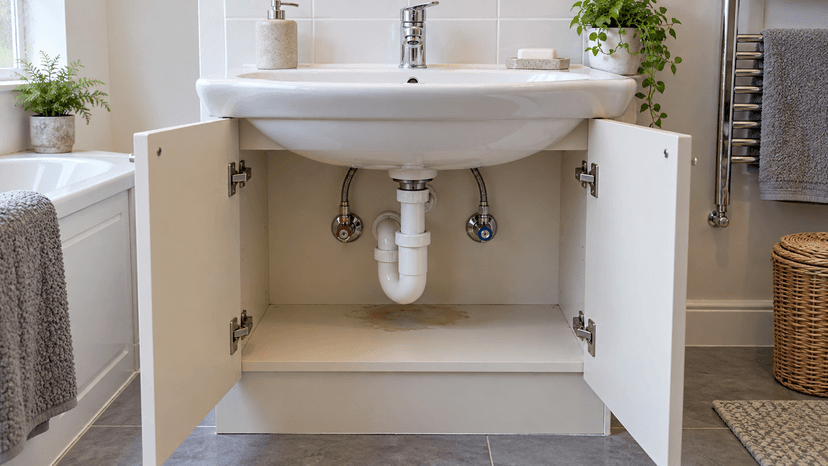
Access deserves the same honesty. A visible trap under a basin is different from pipework behind a fitted unit, tiled panel or finished wall. Mention cupboards, boxing, fixed furniture and any area that cannot be reached without disturbing a finish. This lets the visit be scoped around the property as it is, not around an assumed clear route.
- Say whether water can be isolated, or that this has not been checked.
- Show the wider room so access limits are visible.
- Name any panel, unit, wall or ceiling between the symptom and visible pipework.
- Do not dismantle fittings or cut into finishes to create evidence.
Use photos to show context, not to demand a diagnosis
Photos and clear notes can help with the first check, but WS Gas Solutions Limited’s current plumbing guidance says access, measurements, material choice and present condition still decide the final quote. A photograph can show what is visible; it cannot prove what is happening behind a wall or beneath a floor.
A useful photo set is small and deliberate:
- One wide image showing the room and the affected area.
- One closer image of the visible symptom or fitting.
- One image of accessible pipework or valves, if present.
- One image showing wall or ceiling damage without moving anything.
Add a short note saying when the problem appears, whether it changes when a fixture is used and what you want to achieve. Avoid sending many near-identical close-ups that remove the room context.
Make the first scope name what is known and unknown
A useful booking should state whether the intended first stage is repair or investigation. If investigation is needed, it should also be clear which unknown the visit is meant to resolve: the source of water, the route of concealed pipework, the access available or whether the fitting itself is involved.
The same applies to the preferred outcome. Some customers need a single fitting repaired; others want the cause established before deciding how much finished surface to disturb. WS Gas Solutions Limited asks for visible pipework and the preferred outcome as part of plumbing quote preparation, so include both where they are known.
If the evidence is incomplete, that is not a failed enquiry. It is a reason to scope an investigation rather than pretending the final repair can already be priced from a photograph.
Prepare a one-screen plumbing brief
Before contacting a plumber, put the useful facts into one short message:
- Location: the room, fitting and surface where the symptom appears.
- Pattern: constant, intermittent or linked to using a fixture.
- Isolation: available, unavailable or not yet checked.
- Access: what is visible and what is concealed by a unit, panel, wall or ceiling.
- Condition: any visible pipework, leak signs or wall or ceiling damage.
- Preferred outcome: a known repair, or investigation to establish the correct repair.
- Photos: one wide view and a few clear details from safe, accessible positions.
That brief gives a plumber more to work with than a proposed diagnosis. It also makes it easier to explain why the first visit is being treated as a repair or as an investigation.
Questions customers ask
Can a plumbing repair be quoted from photos?
Photos and notes can support the first check, but access, measurements, material choice and current condition still shape the final scope. They are evidence for the conversation, not proof of a hidden cause.
What if I cannot tell where the water is coming from?
Describe where it appears, when it appears and which fixture was in use. Keep the source marked as unknown and ask for investigation rather than choosing a repair before the cause has been checked.
Should I open a wall or remove a panel before the visit?
No. Show the visible symptom and explain the access limit. Disturbing a finish without knowing the source can create damage without answering the useful question.
What does the plumber need to know first?
Where the fault is showing, whether water can be isolated, what pipework is visible, what access is available and whether you want a known repair or an investigation first.
Read about plumbing work or, where the issue is part of a wider room project, bathroom work. To arrange the right first step in Leyland, use the contact page and send the one-screen brief.