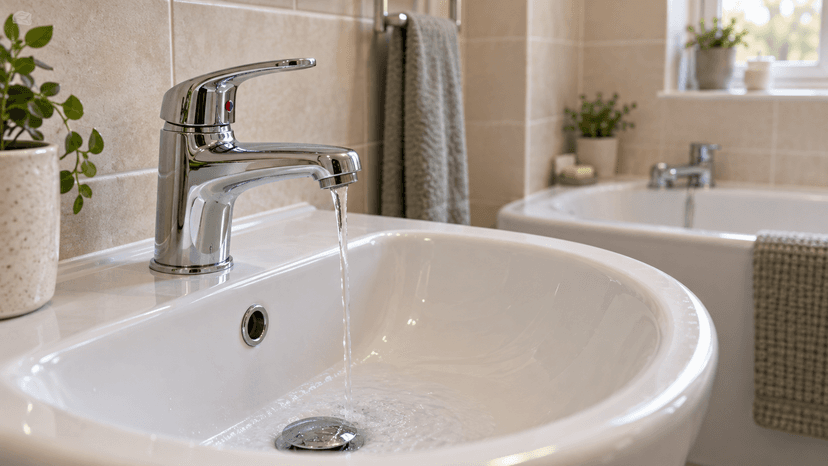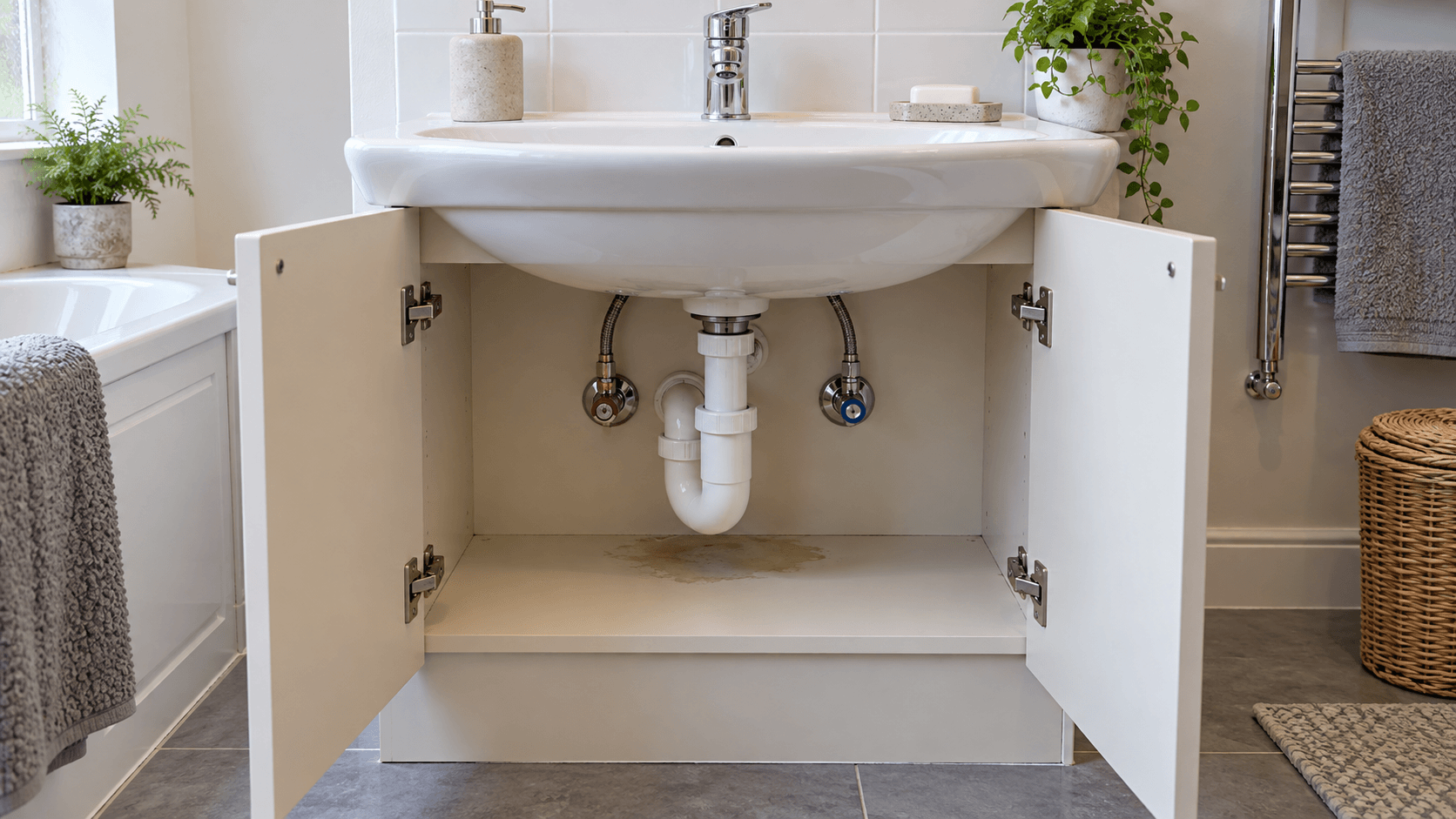
A damp patch beside a basin can mean a small repair to a tap, trap or visible connection, or access to pipework hidden behind a cabinet, panel or finished wall. Opening the room too soon creates avoidable damage; replacing a visible fitting without tracing the water can leave the real fault untouched.
If a problem needs a plumber, Chorley homeowners can make the first visit more useful by separating what is visible from what is only suspected. The first decision is whether the evidence points to the fitting, its connections or the pipework beyond them. WS Gas Solutions Limited handles plumbing enquiries, and clear notes about isolation, access and visible pipework help define the scope.
Start with where the water appears, not where the stain ends
Water often travels along a pipe, cabinet edge or joint before becoming visible. A mark on the floor therefore identifies where the water escaped into view, not necessarily where it first left the plumbing. The best starting point is a calm record of the first place that became wet, what fixture was in use beforehand and whether the water stopped once the supply was isolated.
Do not deliberately run a leaking fitting again to produce better evidence. If the area is already wet, isolate it where that can be done safely and photograph what is visible before wiping up. A picture of the connection, the surrounding finish and the direction of the damp is more useful than a close-up of the stain alone.
Three different scopes can look like the same leak
A drip from a tap spout usually keeps the investigation at the fitting. Water around the base of a tap may come from the fitting or from water tracking across the surface. Damp below a basin can involve a visible supply connection, the waste or trap, while a mark returning behind a dry cabinet may point farther along the route. These are observations rather than diagnoses, but they stop every leak being treated as the same job.
Each route needs different access. A fitting repair may need a serviceable part and clear space below it. A visible connection may need isolation and room to remake the joint. Concealed pipework may require a planned opening and making good. A useful quote should say which scope is allowed for and what finding would change it.
When opening a finish is justified
Opening a wall or panel should follow evidence, not anxiety. It becomes reasonable when the visible fittings and connections do not explain the damp, when the mark returns after the identified surface issue has been dealt with, or when the route of the pipe disappears behind a finish exactly where the evidence continues. Even then, the aim is the smallest useful access point rather than the largest possible view.
Access can sometimes come through a removable panel, cabinet back or adjoining surface that is easier to reinstate. That choice affects labour, disruption and making good. Before agreeing to an opening, ask what it should reveal, why that position is useful and who will reinstate the finish.
Repair the fitting or replace it?
Once the fault is localised to a tap, valve, trap or connector, replacement is still not automatic. A sound fitting with a serviceable component may justify a focused repair. A fitting with unavailable parts, repeated faults, corrosion or poor access may make replacement the more sensible use of labour. The preferred outcome matters too: restoring a reliable existing fitting is a different brief from changing the style or function of the bathroom.
Ask for the two routes to be separated where both are realistic. The repair route should name the component and any uncertainty about parts. The replacement route should cover the new fitting, compatibility with the existing connections, access and any effect on the surrounding surface. That makes the decision about value and disruption rather than guesswork.
Give the plumber evidence that changes the visit
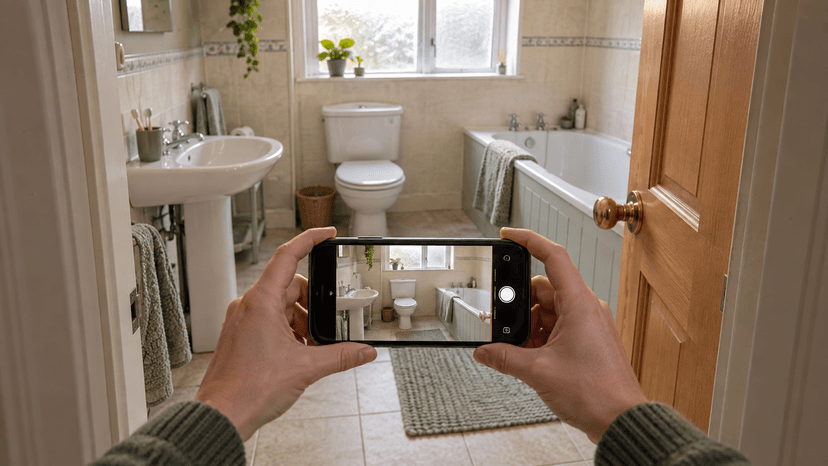
A useful first message says where the water is showing, whether it is still active, whether the fixture can be isolated, which pipework is visible and what outcome you want. Add one wider photograph for context and one close view of the connection. Mention anything blocking access.
- One wider photo showing the fitting, nearby finish and available access.
- One close photo of the visible connection or the first place that became wet.
- A note saying whether the water is still active and whether the fitting can be isolated safely.
Photos and clear notes can support the first check, but they cannot settle every quote. Measurements, access, material choice and the current condition still decide the final scope. That is especially important when a neat finished surface hides the route: the photograph can show the room, but not the condition of pipework behind it.
What a clear scope should tell you
Before work starts, the scope should distinguish diagnosis from repair. It should state which fitting or section is being investigated, what access is included, whether making good is included and what happens if the first opening shows the fault lies elsewhere. A vague promise to “sort the leak” does not answer any of those questions.
WS Gas Solutions Limited provides plumbing services, with related bathroom work where the issue forms part of a wider room project. To start with the right evidence, use the contact page and include the location of the damp, isolation details, visible pipework and the outcome you want.
Frequently asked questions
Can a photograph show whether the leak is behind the wall?
Not by itself. A photograph can show where damp became visible, the condition of nearby fittings and the available access. It cannot prove the route or condition of concealed pipework, so it supports the first check rather than replacing an inspection.
Should a wall be opened as soon as a damp mark appears?
Usually not before visible fittings, joints and available access have been assessed. If those do not explain the evidence, a small planned opening may be justified. Ask what that opening is intended to confirm and how the surface will be reinstated.
What should I send when asking for a plumbing quote?
Send a wider view and a close view, explain where the water is showing, say whether it is still active and can be isolated, note any visible pipework or access limits, and describe whether you want a repair, an investigation or a wider change.
Is replacing the tap always better than repairing it?
No. A focused repair can be sensible when the fault is localised and the part is serviceable. Replacement may offer better value when parts are unavailable, the fitting has repeated faults or access makes the same labour likely either way. The condition and scope should decide it.